

Every seal falls into one of two categories: static or dynamic. The distinction determines which materials, geometries, and design considerations apply. Confusing the two, or choosing a seal designed for the wrong category, is a leading cause of premature seal failure. This guide covers what static and dynamic sealing are, how they differ, and where each shows up in real applications.
A static seal is a seal used between two mating surfaces that do not move relative to each other. The seal is compressed into a gland and holds pressure or excludes contamination without absorbing motion. Static seals rely on the compressive force applied at installation, not on continuous energization from movement.
Common static seal types:
Where static seals show up:
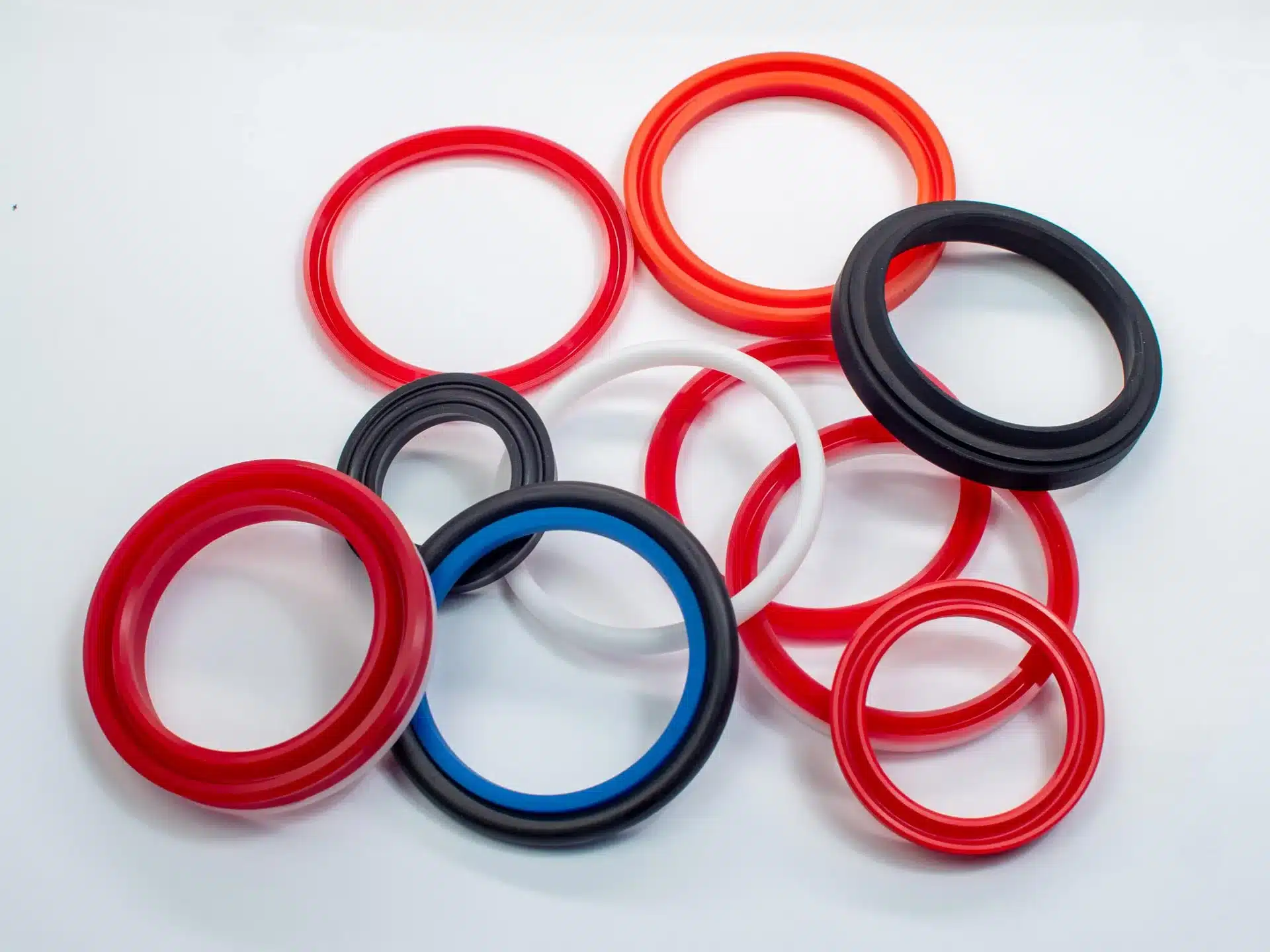
A dynamic seal is a seal used where at least one mating surface moves. The seal must maintain contact with the moving surface while accommodating that motion. This introduces friction, wear, and heat generation that static seals never face.
Two subcategories of dynamic sealing:
Common dynamic seal types:
| Factor | Static Sealing | Dynamic Sealing |
|---|---|---|
| Movement | None between mating surfaces | Reciprocating or rotary motion |
| Failure modes | Compression set, chemical attack, extrusion | Abrasion, wear, extrusion, thermal breakdown, compression set |
| Material considerations | Compression set resistance is primary | Wear resistance and low friction are primary |
| Surface finish (mating) | Less critical | Highly critical: finish affects seal life directly |
| Lubrication | Usually optional | Usually required |
| Typical geometry | O-rings, gaskets, bonded seals | Rod seals, piston seals, rotary lip seals |
| Cycle-life concerns | Low unless thermal or chemical stress is high | High: every cycle wears the seal |
Selecting a static seal for a dynamic application, or vice versa, is one of the most common specification errors in sealing. A static O-ring installed on a moving shaft will abrade quickly. A dynamic seal used in a static flange over-engineers for friction it never encounters, adding cost without benefit.
Practical implications:
Some applications sit between static and dynamic:
When in doubt, treat the application as dynamic. Static-designed seals rarely tolerate motion, but dynamic-capable seals almost always work in static service.